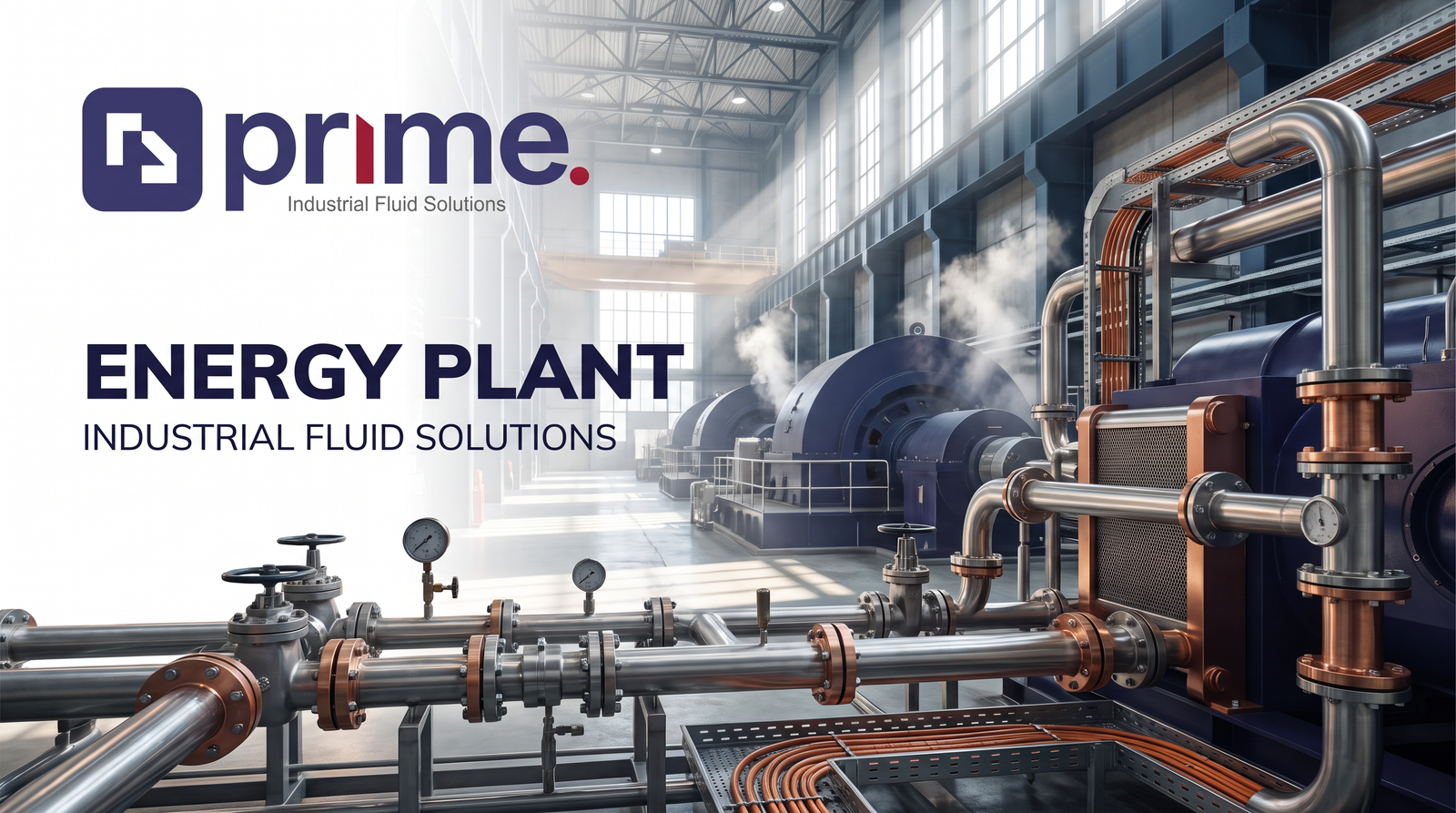
In a power plant, production stoppages are rarely caused by a major failure. More often, it comes down to a small, overlooked component that gives out sooner than expected under high pressure or extreme heat. Steam lines in thermal plants, high-temperature transfer systems in combined-cycle gas facilities, connection points in hydroelectric and geothermal installations that endure constant vibration — each of these depends on a component that appears secondary but is functionally critical: the right hose.
At Prime-IFS, our field experience in the energy sector has made one thing clear: hose selection is not a detail to be left until the end of a project plan. It is a direct part of operational reliability and workplace safety.
The Problem: The Unique Operational Demands of Power Plants
Power generation facilities operate under a combination of conditions that sets them apart from most other industrial environments:
• High pressure and high temperature are present simultaneously and continuously.
• Thermal cycling — the repeated heating and cooling of systems — creates expansion and contraction fatigue in materials over time.
• Vibration, particularly around turbine assemblies and pump stations, places constant stress on connection points.
• The cost of downtime is significantly higher than in other sectors; an unplanned stoppage can affect not only production output but also grid commitments.
• Safety must be the top priority at every point where steam or high-pressure fluids are involved.
Under these conditions, a general-purpose or poorly matched hose does not gradually degrade — it typically fails at the worst possible moment.
The Risk: The True Cost of the Wrong Hose
Selecting an unsuitable hose in a power plant environment can lead to:
• Premature material fatigue and leakage risk under high temperature and pressure
• Unexpected line failures caused by repeated expansion and contraction from thermal cycling
• Connection loosening and mechanical wear driven by vibration
• Significant production losses and maintenance costs from unplanned stoppages
• Personnel safety hazards in the event of steam or high-pressure fluid escape
These risks appear across thermal plants, combined-cycle gas facilities, geothermal and hydroelectric installations, and the auxiliary systems of renewable energy sites — though the risk profile each sub-sector prioritizes differs considerably.
The Insight: Every Sub-Sector Has Its Own Hose Logic
Field experience makes it clear that no single hose type is appropriate for all power plant applications:
• Thermal power plants: Steam lines and high-temperature transfer systems require flexible metal hose solutions capable of withstanding continuous thermal cycling.
• Combined-cycle gas plants: These systems experience simultaneous high pressure and temperature fluctuations, making hose designs that can tolerate both pressure loads and expansion critical.
• Geothermal facilities: Continuous exposure to high-temperature, chemically active fluids puts robust flexible metal hose solutions at the forefront.
• Hydroelectric plants: Intensive use of hydraulic systems means the focus falls on hydraulic hoses built to handle pressure fluctuations and continuous movement.
• Renewable energy facilities and auxiliary systems: Cooling circuits, lubrication systems, and support lines call for composite hoses that deliver both flexibility and resistance to chemical and mechanical stress.
The right question here is not “which hose is best?” but rather “which hose type matches this specific pressure, temperature, and vibration profile?”
The Method: Matching the Right Hose to the Right Application
Prime-IFS approaches the energy sector by grounding every recommendation in real operational conditions on the ground:
• Flexible metal hoses — for steam lines, high-temperature transfer systems, and connection points that need to absorb expansion or vibration.
• High-pressure hoses — for combined-cycle gas plants and lines where pressure fluctuations are significant.
• Hydraulic hoses — for hydroelectric plants and circuits in moving mechanical systems that operate under continuous pressure.
• Composite hoses — for auxiliary systems, cooling and lubrication circuits where flexibility and chemical resistance are both required.
This matching process is not simply a matter of browsing a product catalogue. It is an engineering-based decision that accounts for the facility’s pressure class, temperature range, vibration profile, and tolerance for downtime.
Expertise: Prime-IFS’s Position in the Energy Sector
Prime-IFS supplies hose solutions across a broad industrial spectrum — including chemical, petrochemical, power generation, and heavy industry. Our portfolio spans flexible metal, composite, PTFE, hydraulic, thermoplastic, and high-pressure hoses, each evaluated against the specific operational requirements of the sector in question.
When it comes to power plants, our priority goes beyond product supply. We focus on the right product-application match. Every inquiry is assessed in the context of the facility’s pressure and temperature conditions, thermal cycling frequency, and safety requirements.
The Impact: What the Right Choice Delivers
Selecting the correct hose type produces measurable results across power plant operations:
• Reduced risk of unplanned stoppages
• Long-lasting performance under high temperature and pressure
• Lower frequency of vibration-related failures
• A safer working environment for maintenance personnel and on-site staff
These outcomes matter most in power generation — where the cost of interruption is exceptionally high — and they make a compelling case for treating hose selection as a strategic decision rather than a procurement afterthought.
The Next Step: Toward Sustainable, Reliable Operations
The energy sector is navigating growing capacity demands and increasingly stringent safety standards. Against this backdrop, correctly selecting hose systems — and reviewing them on a regular basis — is becoming an ever more important factor in the long-term operational continuity of power facilities.
At Prime-IFS, we are ready to assess the specific conditions of your facility — whether thermal, combined-cycle gas, geothermal, hydroelectric, or renewable energy infrastructure — and to determine the right hose solution together.
Get in touch to receive a sector-specific recommendation and learn more about Prime-IFS hose solutions.
#PrimeIFS #PowerPlants #HoseSolutions #FlexibleMetalHose #HydraulicHose #HighPressureHose #CompositeHose #IndustrialSafety #ThermalPowerPlant #GeothermalEnergy #Hydroelectric #RenewableEnergy
Related Articles

Hoses
Hotels are among the most demanding buildings to protect from fire. They combine sleeping occupants who may be unfamiliar with the layout, high concentrations of furnishings…